Lincoln Bedroom
Deception PointThe Lincoln Bedroom is a White House room whose historical associations give Rachel Sexton and Michael Tolland’s late-night encounter an unusually charged setting. Entering it in an old Penn State football jersey, Rachel first encounters its presidential relics and ghost lore; the room then becomes the stage for Tolland’s teasing appearance in presidential pajamas.
Setting and Historical Associations
A Secret Service agent leads Rachel down an impeccably appointed hallway to the plain-looking doorway of the Lincoln Bedroom. Before she enters, the agent repeats the customary warning spoken outside it: “Sleep well, and beware of ghosts.” The phrase points to a cluster of stories attached to the room: Winston Churchill, Eleanor Roosevelt, Amy Carter, actor Richard Dreyfuss, and generations of household staff were said to have seen Lincoln’s ghost, while President Reagan’s dog was reportedly known to bark outside the door for hours.
The room’s significance is not merely legendary. Rachel recognizes it as a sacred historical place, and that awareness sharpens her embarrassment at standing outside in a long football jersey, bare-legged and feeling like a college student sneaking into a boy’s room. The contrast between her casual, exposed appearance and the room’s presidential associations makes its history an active part of the scene.
The Room at Night
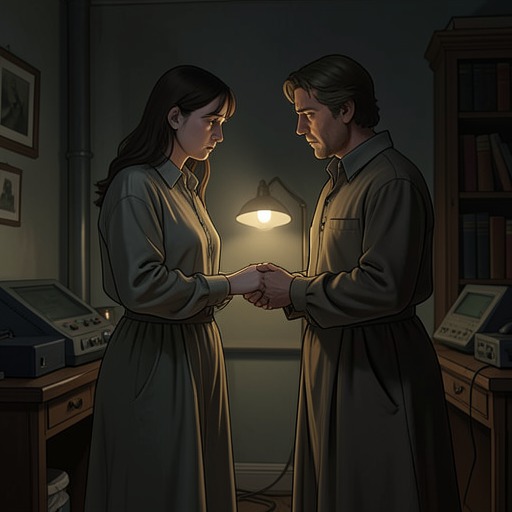
When Rachel enters, the bedroom is dark, and its bed is empty and untouched. An antique oil lamp casts a soft glow over the Brussels carpet, the carved rosewood bed, a portrait of Abraham Lincoln’s wife, Mary Todd, and the desk where Lincoln signed the Emancipation Proclamation. These objects make the room feel inhabited by history even before the ghost story becomes a joke in the present.
A clammy draft comes from an open window, whose white organza curtains billow. As Rachel crosses the room to close it, a whisper from the closet calls, “Maaaarrrrrrrry…” The darkness, the moving curtains, the historical portrait, and the familiar ghost legend briefly align to make the bedroom seem uncanny. The voice then continues with a theatrical apology for having gone years without a woman; Rachel answers by yanking the closet door open, puncturing the supernatural suspense with her recognition of the prank.
Rachel and Tolland’s Encounter
Michael Tolland stands in the closet with a lopsided grin, wearing navy-blue satin pajamas emblazoned with the presidential seal. Rachel reacts with a double take and asks, “Presidential pajamas?” Tolland explains that they were in the drawer. The room’s official history thus meets an incongruously intimate, comic detail: its presidential furnishings and souvenirs become part of a private joke between the two visitors.
The Lincoln Bedroom shifts, over the course of the encounter, from a place Rachel approaches with embarrassment and reverence into a setting for playful closeness. Its legends supply the setup for Tolland’s ghostly performance, while the sudden reveal restores the scene to ordinary human mischief. The room’s narrative force lies in that reversal: historical grandeur and ghostly unease briefly heighten the encounter, then make the familiar pajamas and the closet prank all the more comic.